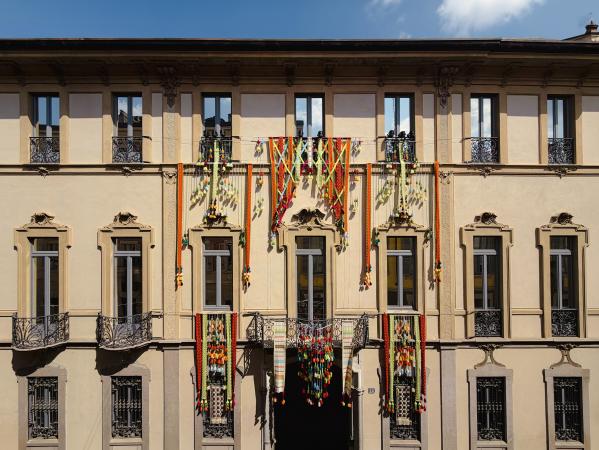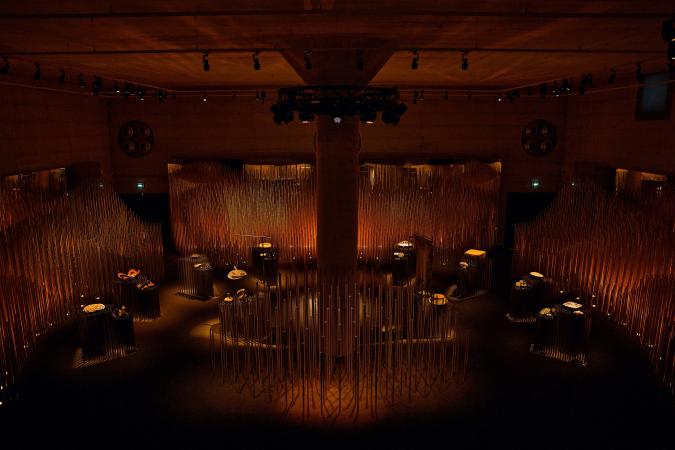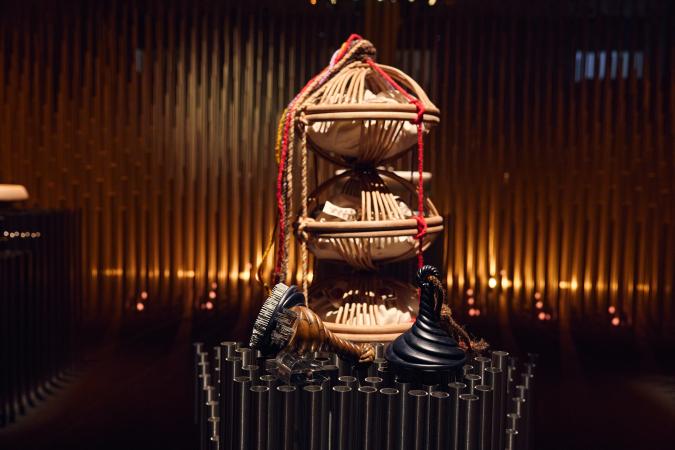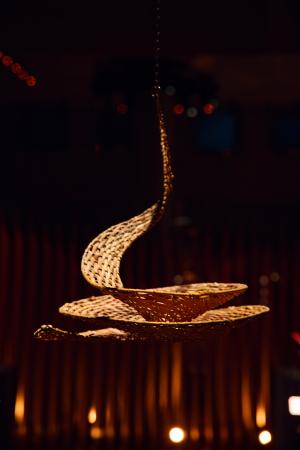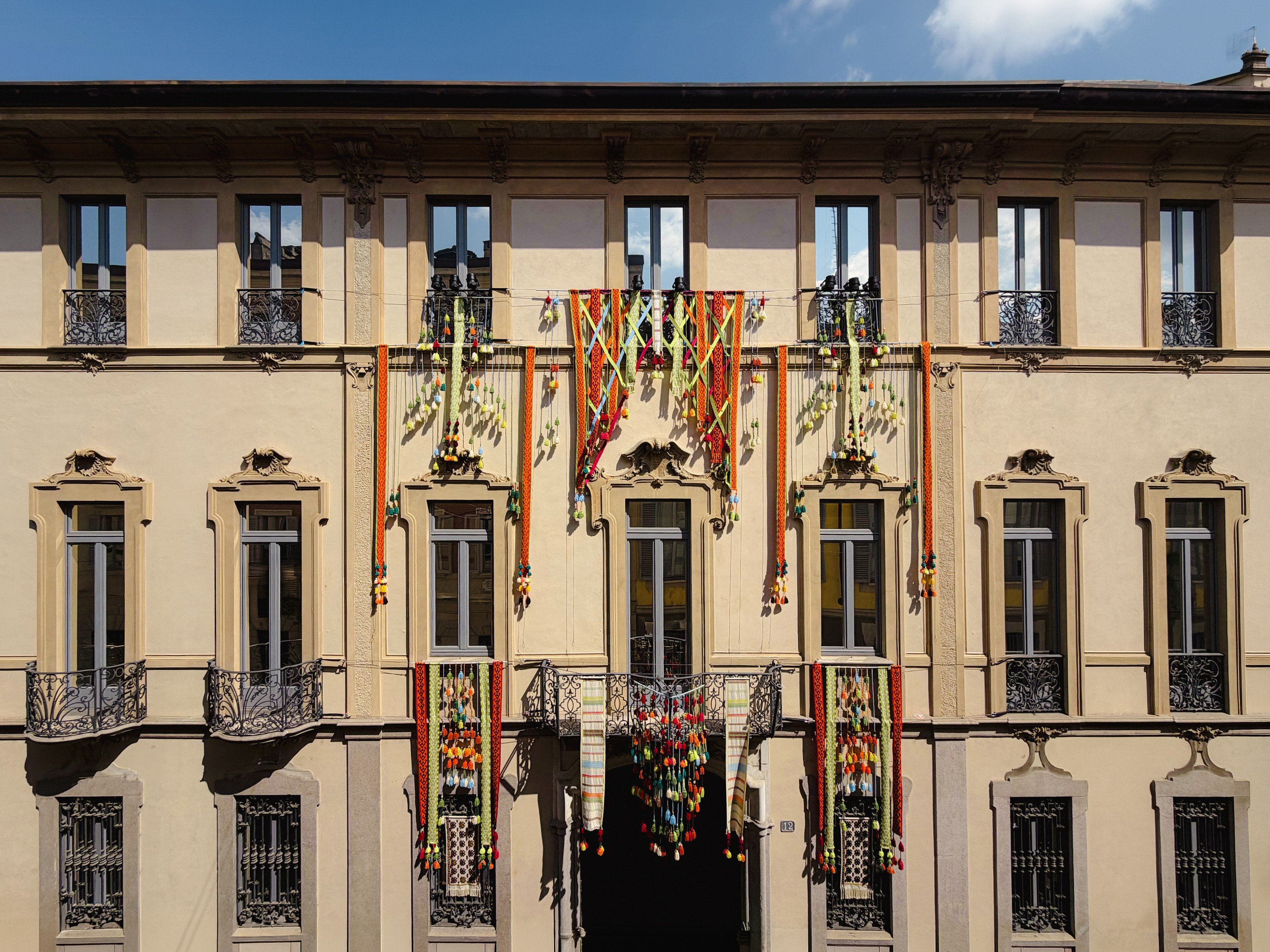
When Apricots Blossom, initiated by the Uzbekistan Art and Culture Development Foundation (ACDF), and curated by architect Kulapat Yantrasast, Founder and Creative Director of WHY Architecture, was presented at Palazzo Citterio, Via Brera 12, Milan, during Milan Design Week 2026 (20–26 April). Inspired by a poem by renowned Uzbek writer Hamid Olimjon, the exhibition explored themes of hope, renewal and resilience through the cultural heritage of the Aral Sea region and Karakalpakstan — a region that has undergone dramatic environmental transformation, yet whose communities continue to preserve and adapt their cultural practices. The exhibition unfolded as a journey through three essential elements of daily life: textiles, food and shelter.
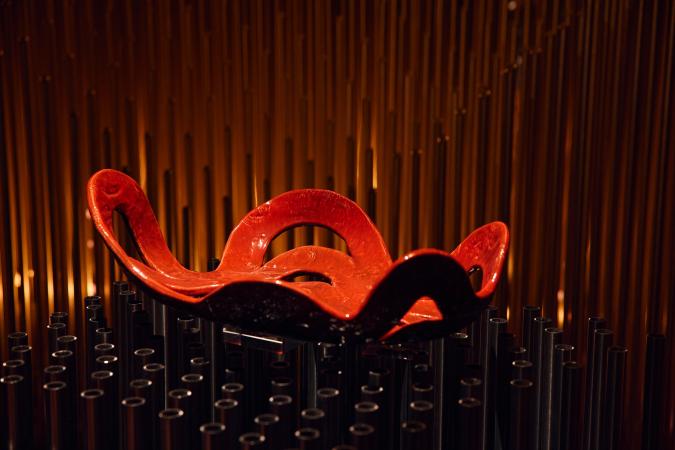
Twelve international designers — Bethan Laura Wood, Bobir Klichev, Didi NG Wing Yin, Fernando Laposse, Marcin Rusak, Nifemi Marcus-Bello, Sanne Visser and Sevara Haydarova Donazzan, alongside design studios Glithero, Studio CoPain and Raw Edges — worked closely with Uzbek artisans Shukurjon Azimov, Nigora Amangeldieva, Boburjon Atabayev, Abdulla Abdurazzokov, Abdulvahid Bukhoriy, Otabek Gaybullayev, Madina Kasimbayeva, Nursultan Qosbergenov, Lyudmila Yusupova, Yorqinoy Yuldasheva, Biybisara Kunnazarova and Altinay Naubetova to create new works in silk, felt, wood, ceramic and reed — contemporary interpretations rooted in local craft knowledge.
A specially commissioned film, Where the Water Ends, by filmmaker Manuel Correa and architect Marina Otero Verzier, offered a meditation on memory, landscape and climate collapse in the Aral Sea region.
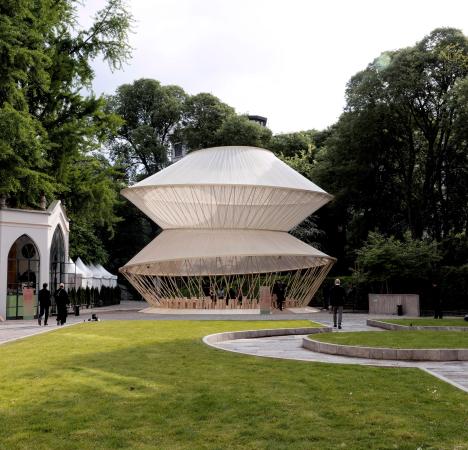
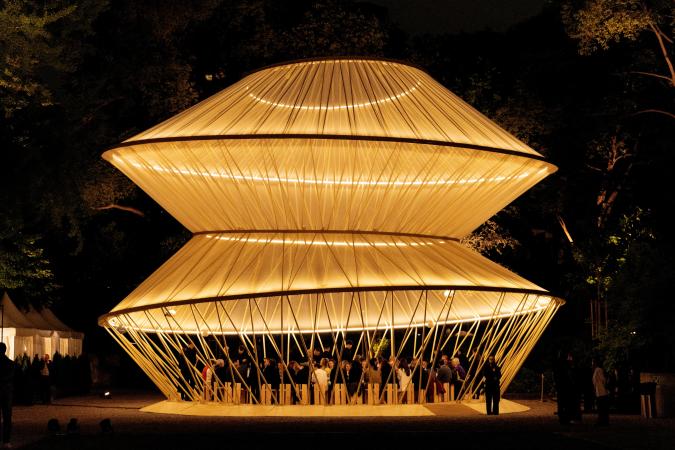
At the heart of the exhibition stood the Garden Pavilion — a 15-metre-wide deconstructed yurt designed by Kulapat Yantrasast, reinterpreting the nomadic grace of traditional Uzbek dwellings through a lightweight latticed framework of steel and translucent fibre. Conceived as a space for gathering and reflection, its open structure symbolised both the adaptability of nomadic shelter traditions and the absence left by the retreating Aral Sea. Following the strong response and continued interest after Milan Design Week, the pavilion was invited by Pinacoteca di Brera to remain on site for an additional two months, extending its presence at Palazzo Citterio until the end of July 2026. During this time, the space continued to host a series of events and talks, sustaining its role as a platform for dialogue and exchange. The pavilion will subsequently be relocated to Nukus, where it will become part of a creative park, taking on a new function and continuing its life in a new context.
The exhibition was accompanied by a free public programme of five talks, two hands-on workshops and daily guided tours, all held at the Garden Pavilion. The talks brought together an international line-up including Carlo Ratti, Fernando Laposse, Jan Boelen, Sarah van Gameren, Marcin Rusak, Nifemi Marcus-Bello and Sanne Visser, exploring themes of bioregional design, craft preservation, cultural infrastructure and ecological memory. Workshops introduced visitors to two distinctive Uzbek and Karakalpak traditions — bread stamp carving (chekich) and tassel making — led by Uzbek artisans alongside guest designers. Alongside the exhibition, visitors also discovered initiatives including the Aral Culture Summit and the Aral School, reflecting ACDF's long-term commitment to cultural and environmental dialogue in the region.
When Apricots Blossom welcomed over 25,000 visitors across its seven-day run, with 600 participants attending the onsite workshops and 500 joining the daily talks. The exhibition was awarded the Media Partners Special Mention by the FuoriSalone jury, recognising it as one of the most memorable projects of Milan Design Week 2026.

Menu